Before the First Morning: Blue Lotus, Nefertem and the Birth of Light in Ancient Egypt
Sep 03, 2026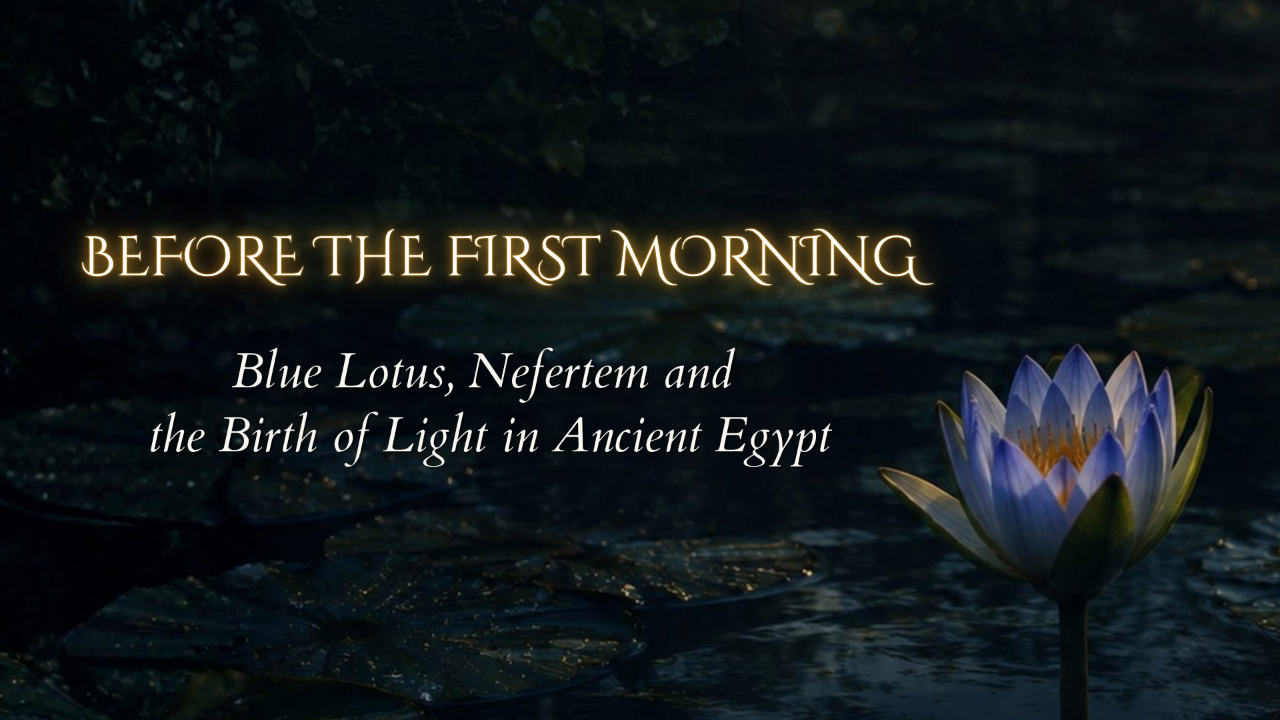
There are moments when life becomes quiet enough for us to sense that something is forming beneath the surface.
We may not yet have a name for it. We may not know what it will ask of us or when it will appear. We only know that the old shape of things is loosening and that a new light is waiting to be born.
The blue lotus held this mystery for the people of ancient Kemet.
Opening with the morning sun and drawing inward again as daylight faded, the flower became a living image of emergence, regeneration and the daily renewal of creation. Its meaning was not invented apart from the natural world. It was observed in the water, carried into sacred story and carved into the walls of temples and tombs.
To approach the blue lotus is therefore to approach more than a beautiful flower. It is to enter an ancient meditation upon darkness and light, fragrance and breath, hidden roots and visible becoming.
Before Form: The Waters of Nun
Ancient Egypt did not preserve one single, uniform creation story. Different sacred centers developed distinct but overlapping ways of contemplating the beginning: Heliopolis emphasized Atum and the unfolding of the Ennead; Hermopolis spoke of the primordial powers known as the Ogdoad; Memphis placed creative intelligence, speech and Ptah at the center.
These traditions were not necessarily treated as rivals. Together, they offered different doors into a mystery too vast to be held by only one image.
Across them flows a recurring presence: the primeval waters, called Nun.
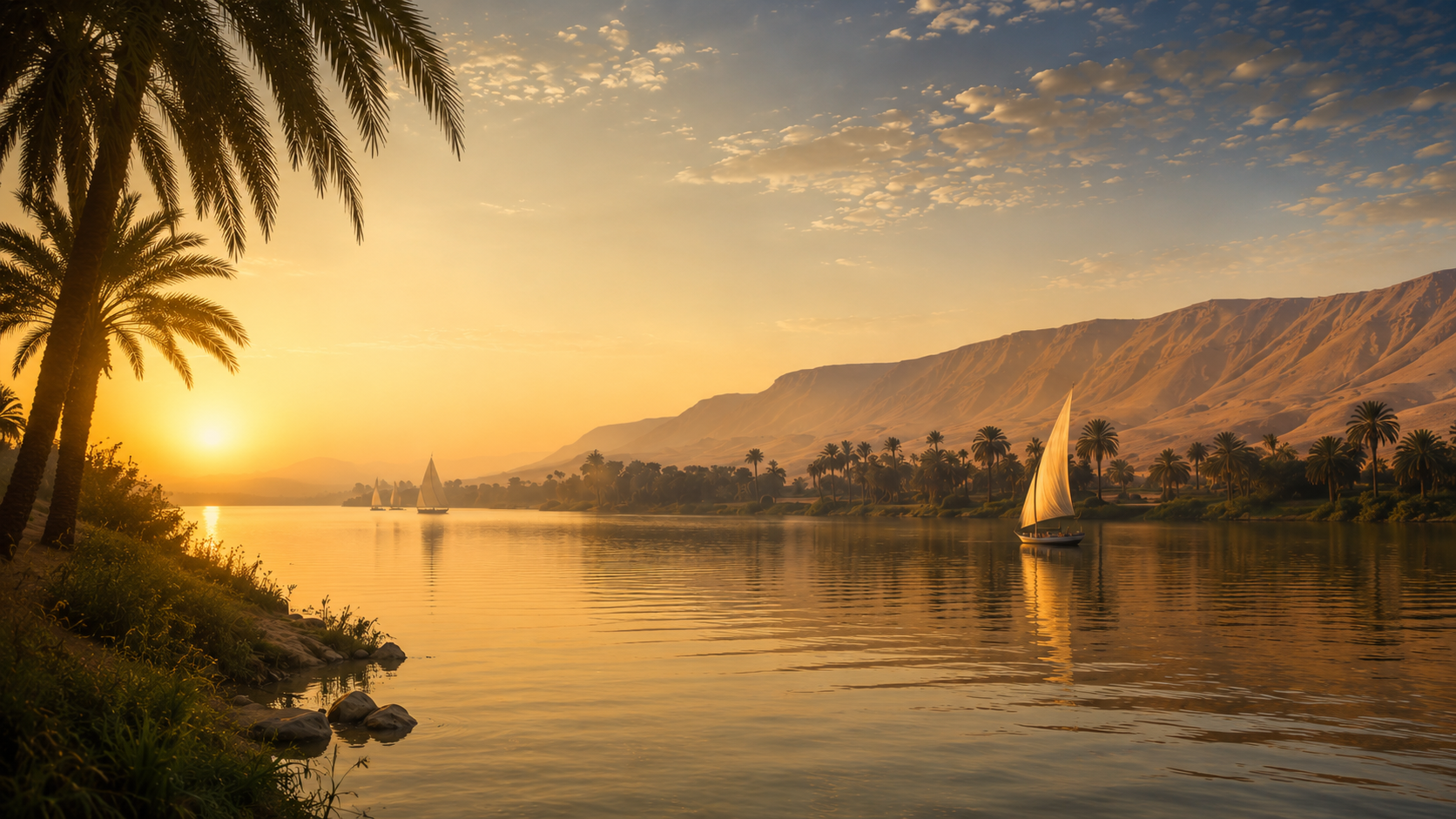
Nun was not simply an ocean in the ordinary sense. It represented the limitless, unformed condition before the ordered world had appeared -a realm without firm ground, familiar boundary or differentiated life. The annual rhythm of the Nile made this cosmic image visible: water covered the land, then the dark, fertile earth emerged again as the flood receded.
Creation was not only something that had happened once in a remote beginning. It could be witnessed in the return of land, light and life.
From the waters, the first ground arose. And in one of Egypt's most evocative images of creation, a flower opened upon those waters and revealed the newborn sun.
Sšn: The Flower That Opened to the Sun
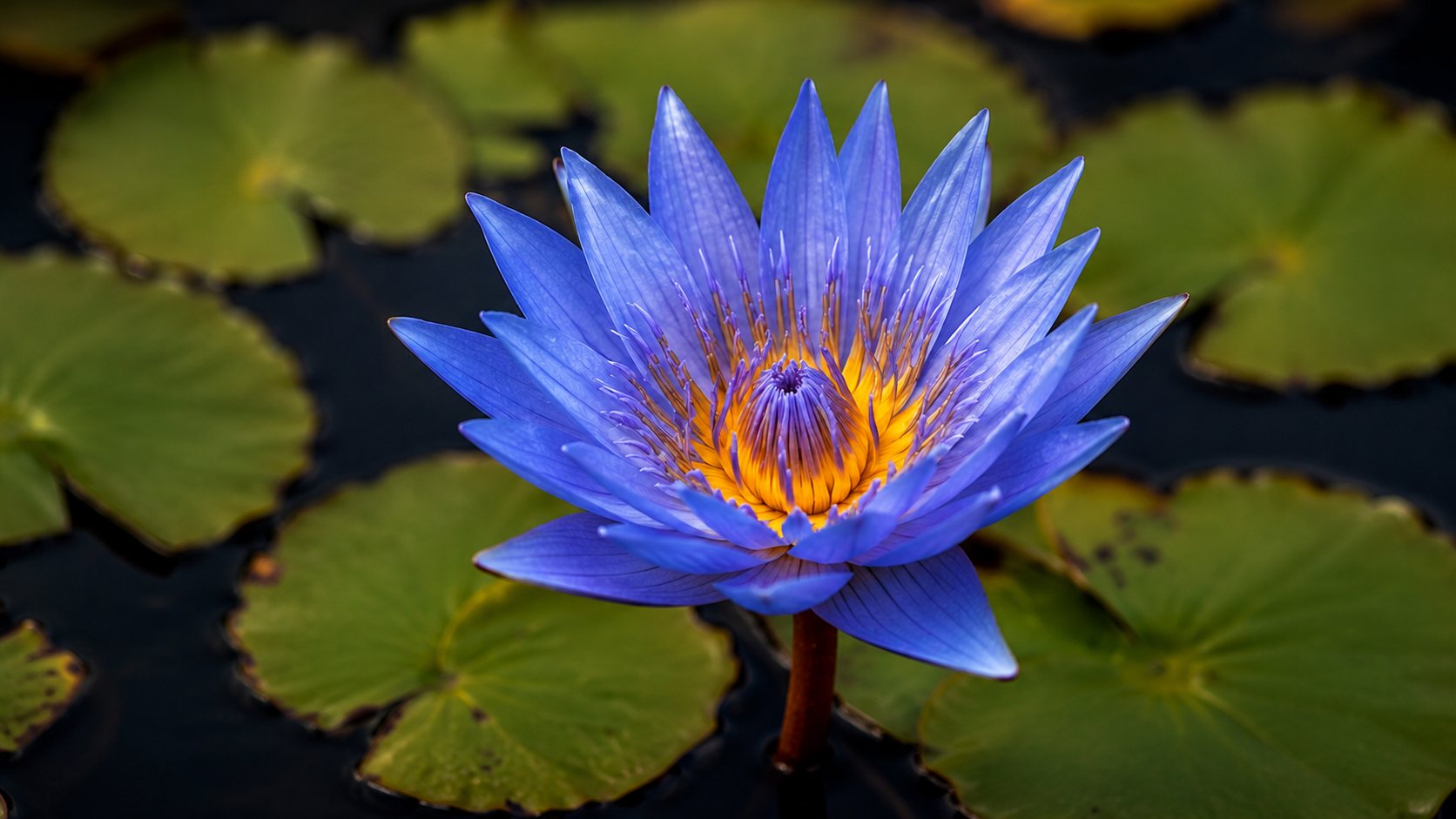
The Egyptian word commonly transliterated "Sšn” often rendered seshen referred to the water lily. The flower most often called the Egyptian blue lotus today is botanically a water lily rather than a true lotus. Kew currently recognizes it as Nymphaea nouchali "var. caerulea", with Nymphaea caerulea treated as a synonym.
Its popular name endures because "blue lotus" carries the language through which many people first encounter this sacred flower.
The plant grows from a rhizome anchored in the mud. Its stem travels upward through the water, and its blossom opens into the light. Each part of that movement offers a teaching:
- The mud is not a mistake; it is the place of rooting.
- The water is not an obstacle; it is the medium of becoming.
- The darkness is not the opposite of creation; it is where creation gathers itself.
- The blossom does not force the sun to rise; it opens when the light arrives.
For the ancient Egyptians, this daily rhythm made the blue water lily a natural emblem of the sun's renewal. The flower's closing and reopening could mirror disappearance and return, night and morning, death and regenerated life.
Nefertem: The Divine Lotus
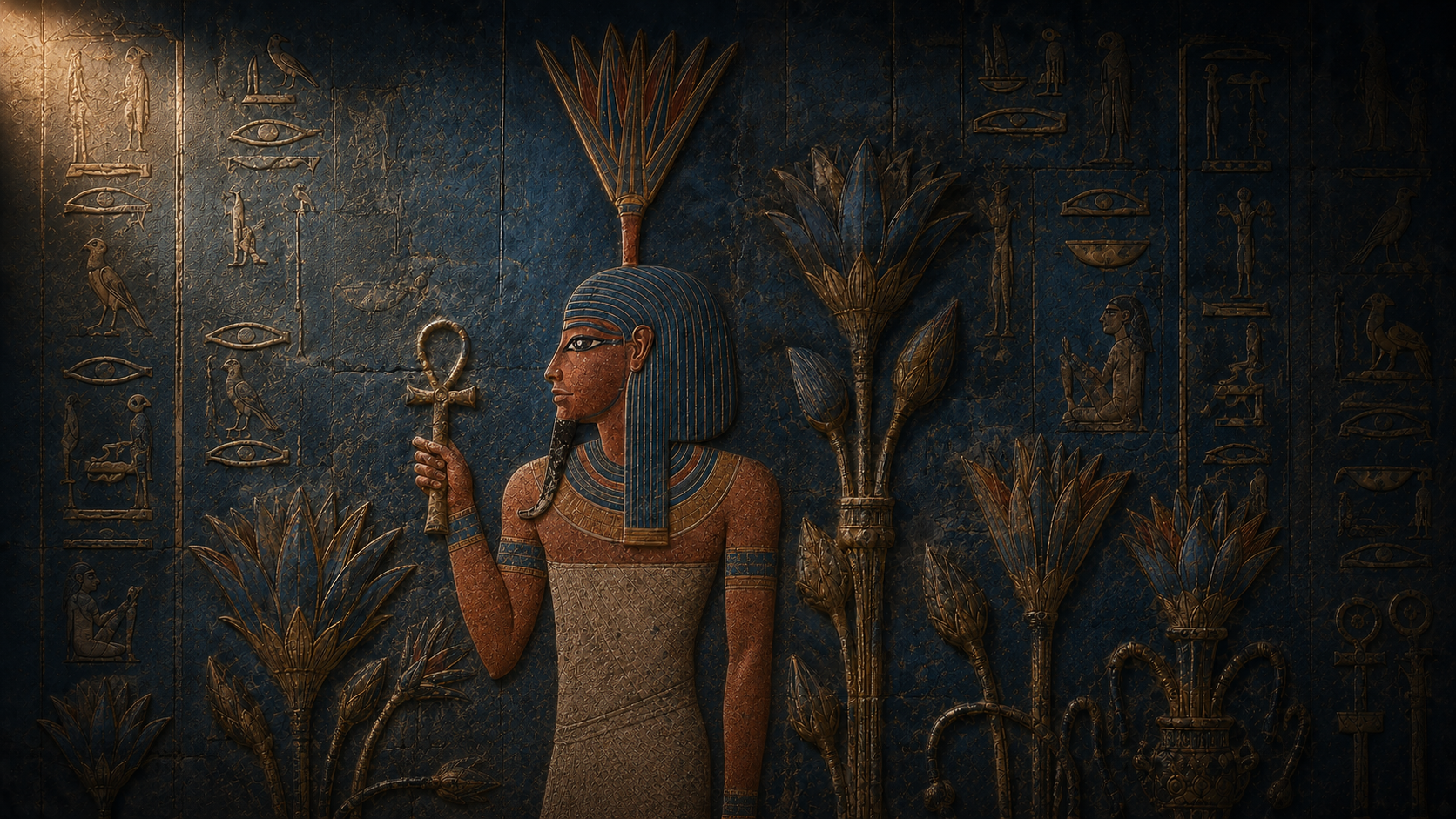
By the New Kingdom and in later periods, the image of the lotus at creation was closely associated with "Nefertem" the youthful deity whose crown bears a lotus blossom, often accompanied by two tall plumes and hanging counterweights.
Nefertem was connected with the newborn sun, the beauty and fragrance of the lotus, and the scented oils used in sacred and royal life. He embodies the instant when what has rested unseen becomes perceptible: light reaches the horizon, the flower opens and fragrance moves into the air.
In the Memphite tradition, Nefertem was understood as the child of Ptah and Sekhmet. This relationship brings another layer to his meaning. Ptah expresses creative power through heart and speech. Sekhmet bears the fierce solar force that can destroy imbalance and restore right order. Their child appears as tenderness after intensity, perfume after heat, and new life after transformation.
This does not make Nefertem merely a symbol of pleasantness. A flower born from the primordial waters carries the memory of what preceded it. Renewal is beautiful because it has passed through the unknown.
The Lotus at the Nose of Ra
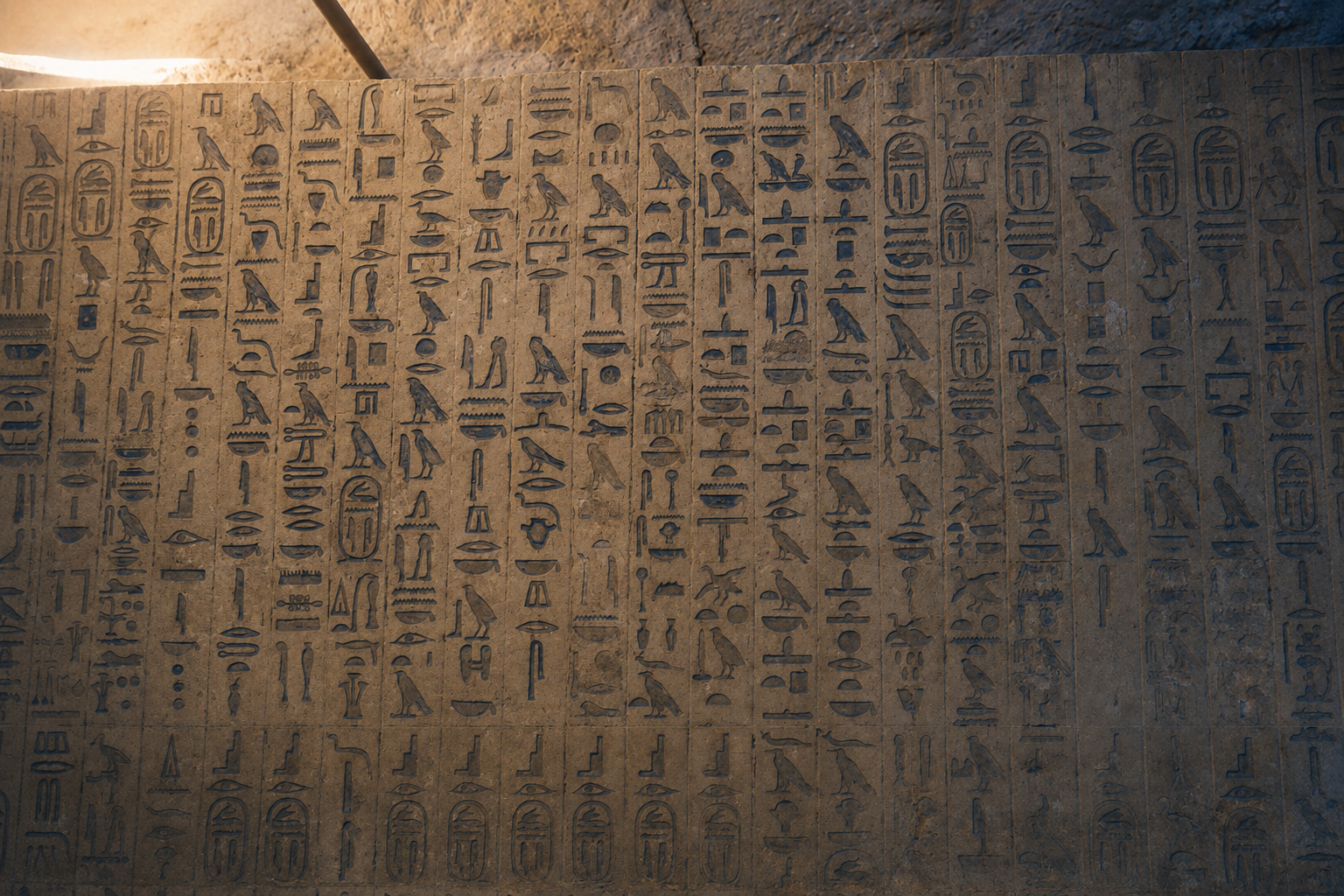
One of the oldest surviving textual connections between Nefertem, the lotus and the rising sun appears in the Pyramid Texts of King Unas at Saqqara.
In Utterance 249, the king is identified with Nefertem as the lotus at the nose of Ra, emerging from the horizon each day. The image is intimate: the flower is not simply seen by the sun god; it is held at the place of breath and scent.
To the modern reader, this may evoke several interwoven movements:
- the return of breath;
- the awakening of consciousness;
- the fragrance that announces a presence before it is seen;
- the daily possibility of becoming new.
The ancient text belongs to its own ritual and royal context, and we need not flatten it into a modern affirmation. Yet we can allow its image to meet us. What would it mean to greet each morning as an emergence from the horizon? What dormant quality might be ready to breathe through us again?
What the Lotus Teaches
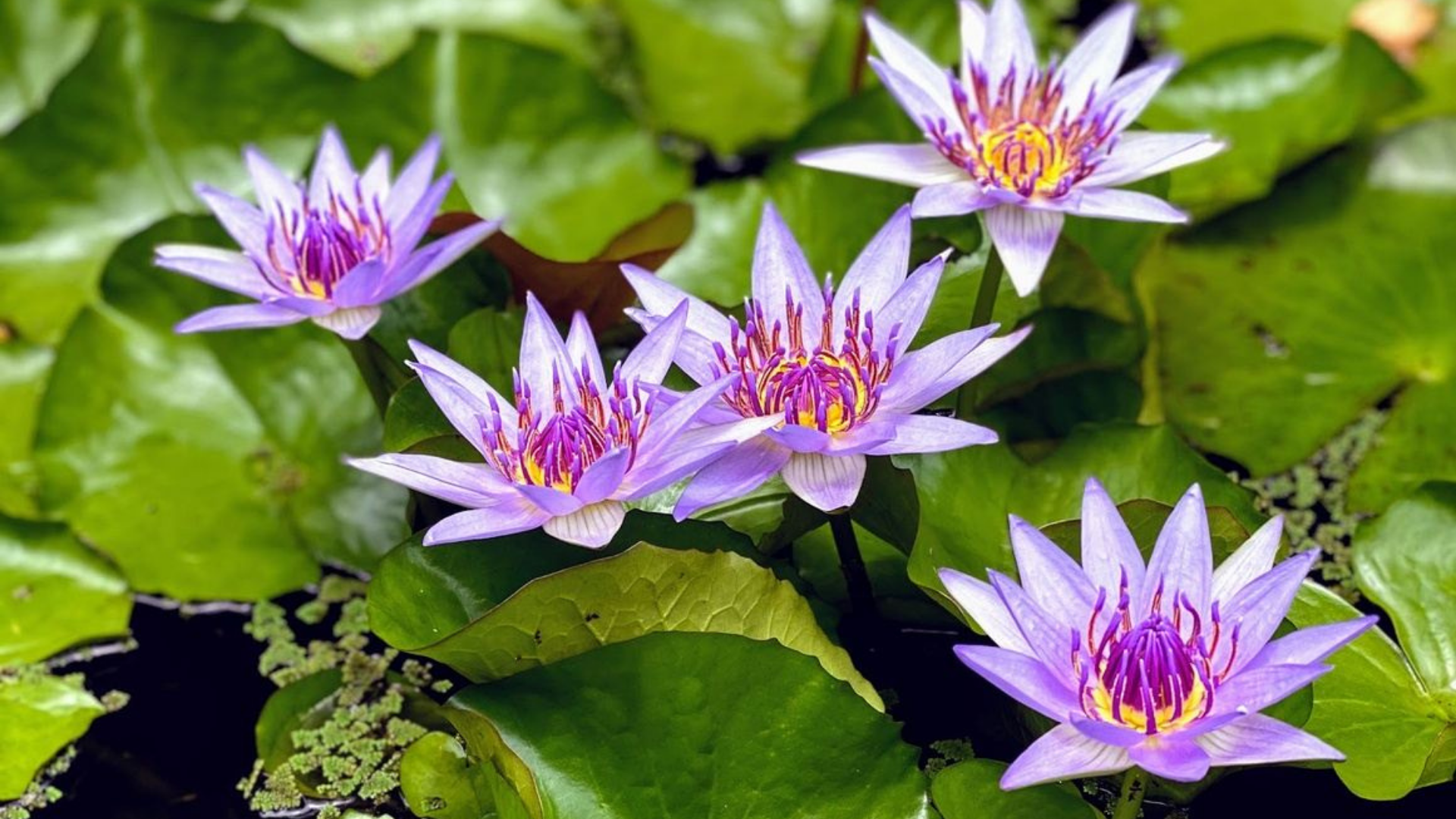
In our own blue lotus ponds on Maui, the teaching becomes beautifully practical.
You do not feed the flower.
You nourish the roots and clear what crowds the water.
The blossom that eventually rests upon an altar begins below the surface, receiving the quiet tending no one sees. Nutrients are placed into the soil. Overabundant plants are removed before they choke the light and space the lotus needs. The water is watched. The roots are trusted.
Our inner lives often ask for the same kind of devotion.
We may want the visible bloom: the answer, the healing, the creative work, the new direction. But a blossom cannot be commanded into being. We can only tend the conditions that allow it to arrive.
We rest. We listen. We clear what has become too crowded. We nourish what is still tender. We make one honest gesture of care, then another.
The wisdom of the lotus is not passive. It is a disciplined receptivity a willingness to participate fully in the tending while releasing our demand to control the hour of the bloom.
A Living Reflection
Bring to mind something quietly forming within you. It may be a relationship with yourself, a vocation, a healing, a boundary, a prayer or a way of living that does not yet have its final form.
Rather than asking, "When will it bloom?", consider:
- What roots are asking to be nourished?
- What has become too abundant and now crowds the water?
- What small act of devotion would create more room for light?
- Can I honor what is emerging before I can fully explain it?
Place a glass of fresh water between your hands and take three slow breaths.
Choose one quality you wish to nourish perhaps trust, clarity, courage, compassion, peace or renewal. Speak that quality over the water, then drink slowly. Let the gesture remind your body that transformation is not only an idea. It is something we practice, receive and embody.
You do not need to see the entire path.
The next honest act of tending is enough.
Returning to the Source
When we travel through Egypt, the blue lotus meets us again and again: opening in carved relief, carried as an offering, woven into columns and crowns, and appearing in texts that have endured for thousands of years.
To stand before these images is to encounter the flower within the landscape and spiritual imagination that gave it sacred meaning. We do not go merely to collect facts or photographs. We go to listen—to the temples, to the Nile, to the desert, to the living people of Egypt and to what the journey awakens within us.
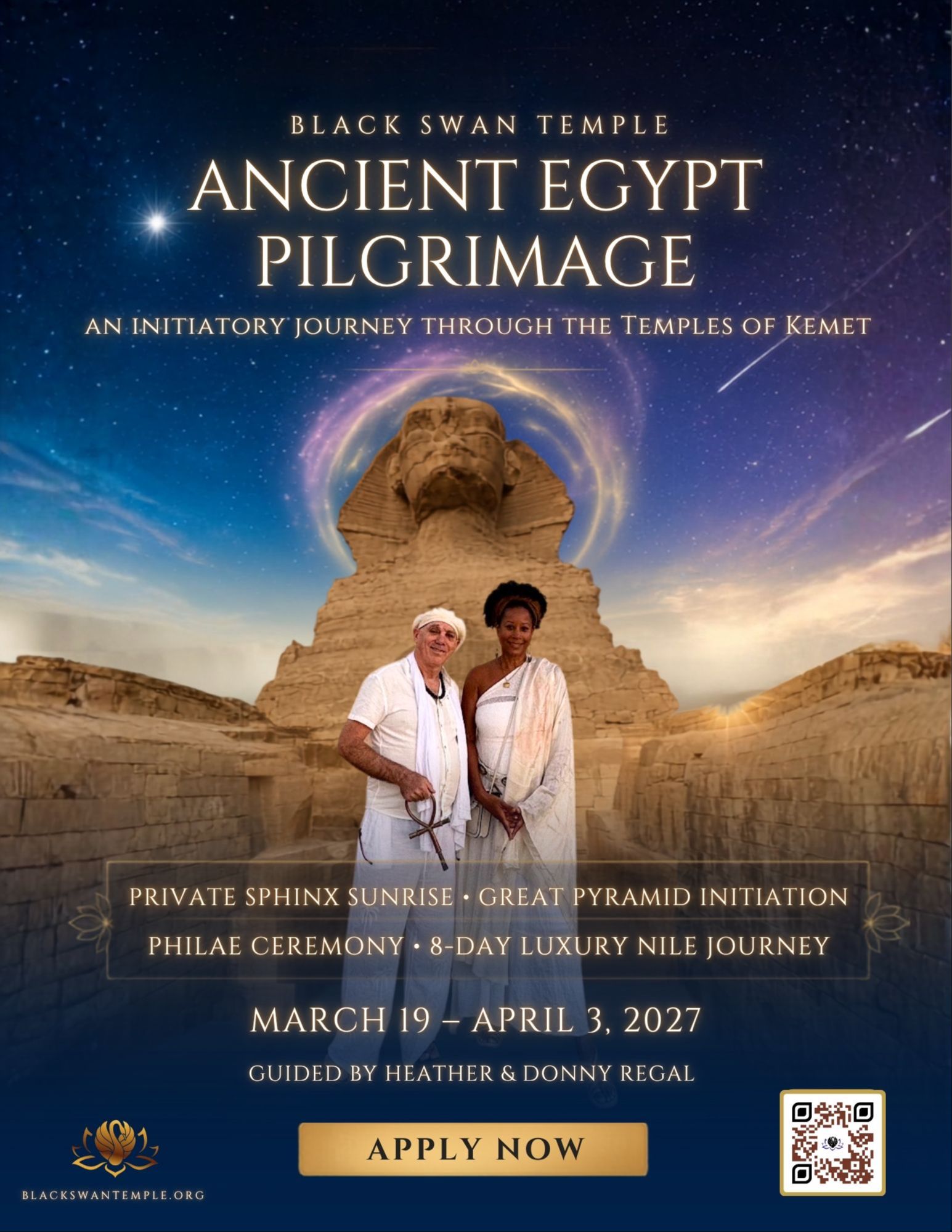
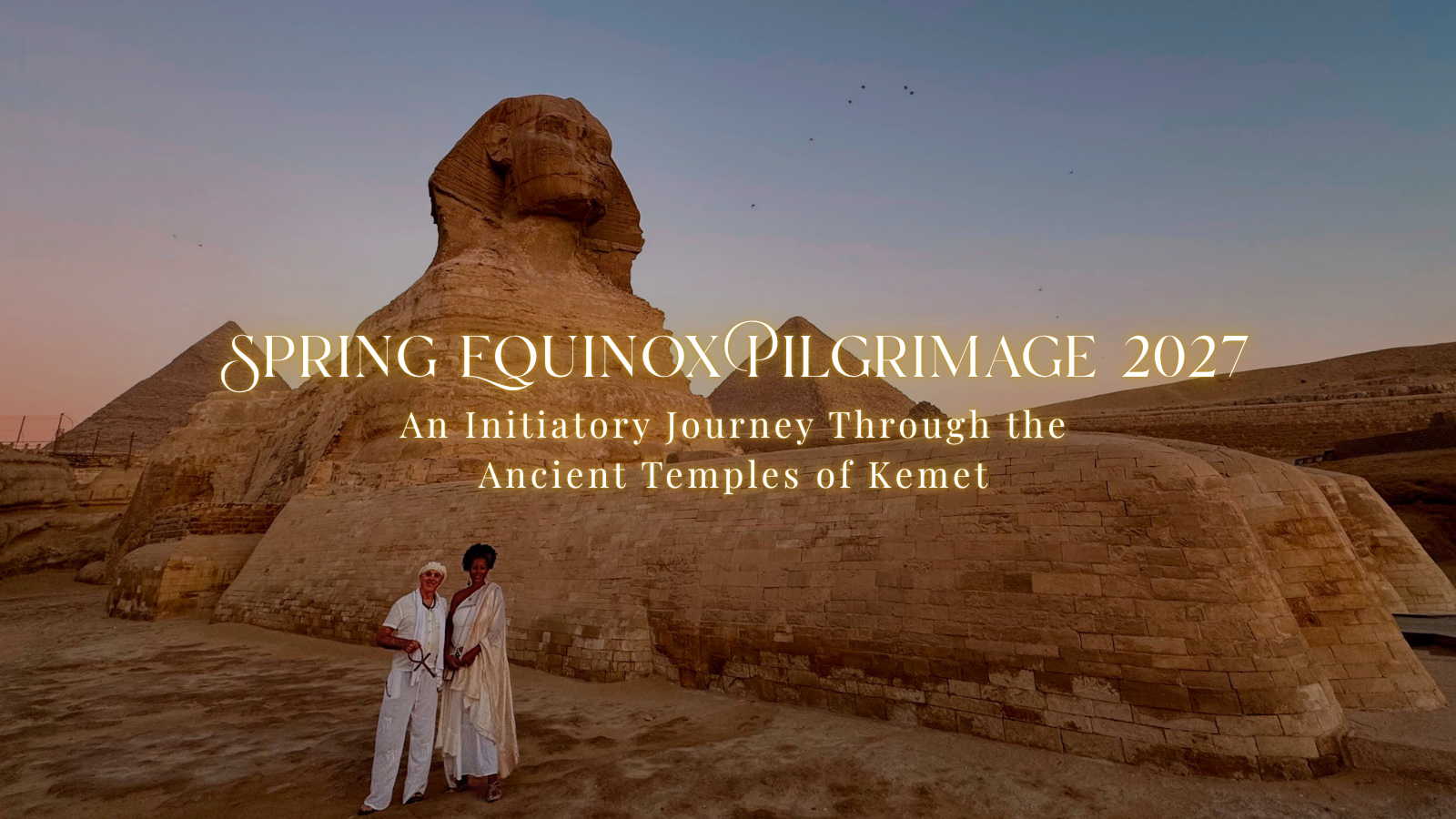
From March 19 -April 2, 2027 we will return to Kemet for the Black Swan Temple Ancient Egypt Spiritual Pilgrimage.
Together, we will enter sacred sites with reverence, explore the teachings held in their art and architecture, and create space for those ancient images to become living questions within our own lives.
If the blue lotus is calling you toward the waters from which it first arose, we would be honored to journey with you.
EXPLORE THE PILGRIMAGE
With love,
Heather & Donny Regal
Co-founders, Black Swan Temple