The Heart, the Feather & the Hope Beyond
Oct 13, 2026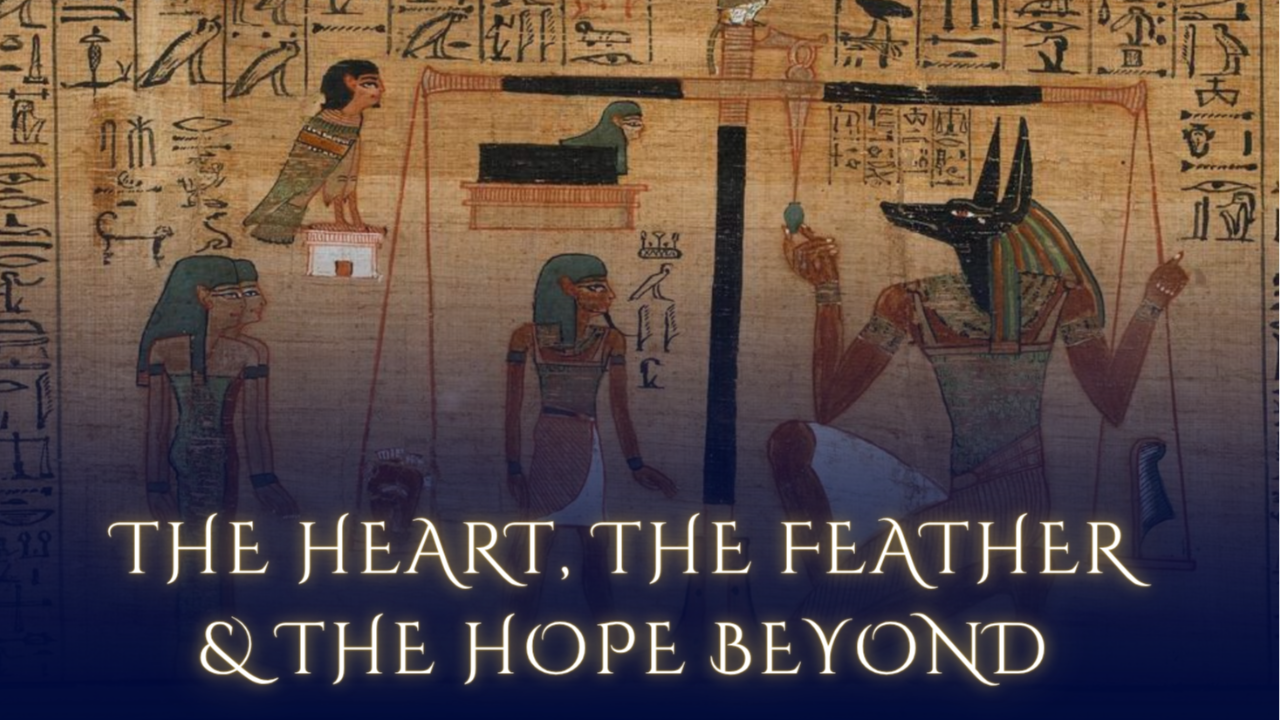
A Temple Scroll on Ma’at, renewed life, and the choices that shape us
What would it mean for your heart to balance with truth?
Imagine a pair of scales. In one pan rests a human heart. In the other, a single ostrich feather.
Around them, divine figures attend a moment of extraordinary consequence. The heart carries the testimony of a life. The feather represents Ma’at: truth, justice, and the order that sustains the world.
This ancient Egyptian image opens a question that still reaches into our lives:
How do we give form to what we hold sacred?
Ma’at: The Order We Participate In
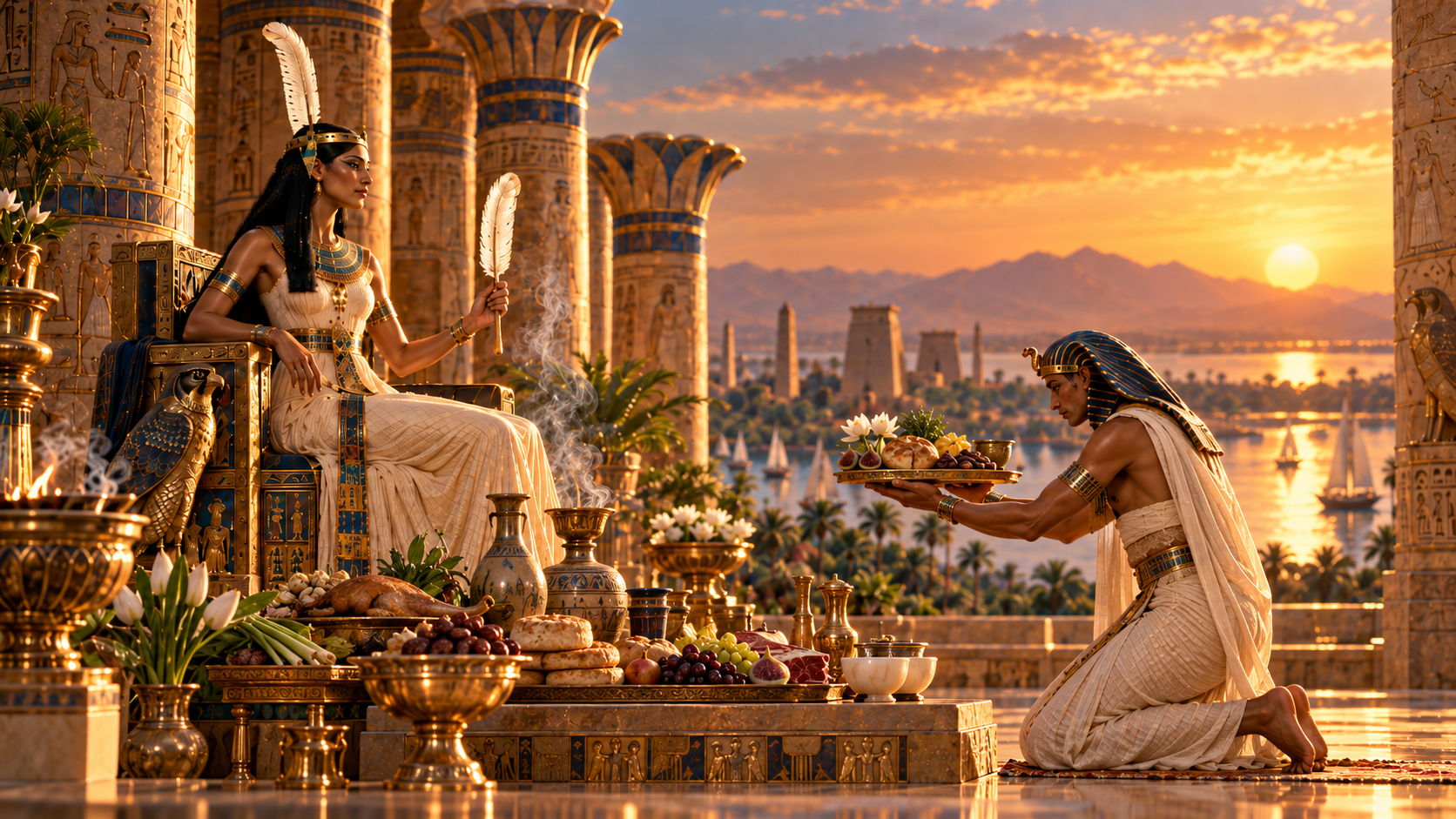
Ma’at is both a goddess and a principle of divine order. Her meaning connects the workings of the cosmos with human conduct.
Truthfulness, fairness, and responsibility belong within this understanding. On temple walls, rulers present a small seated figure of Ma’at to the gods, expressing their responsibility to uphold that order.
As we contemplate Ma’at today, we can begin close to home: with the promises we make, the resources we share, and the care we bring to our relationships.
Balance becomes something we practice together. Our choices have consequences beyond ourselves.
Entering the Hall of Two Truths
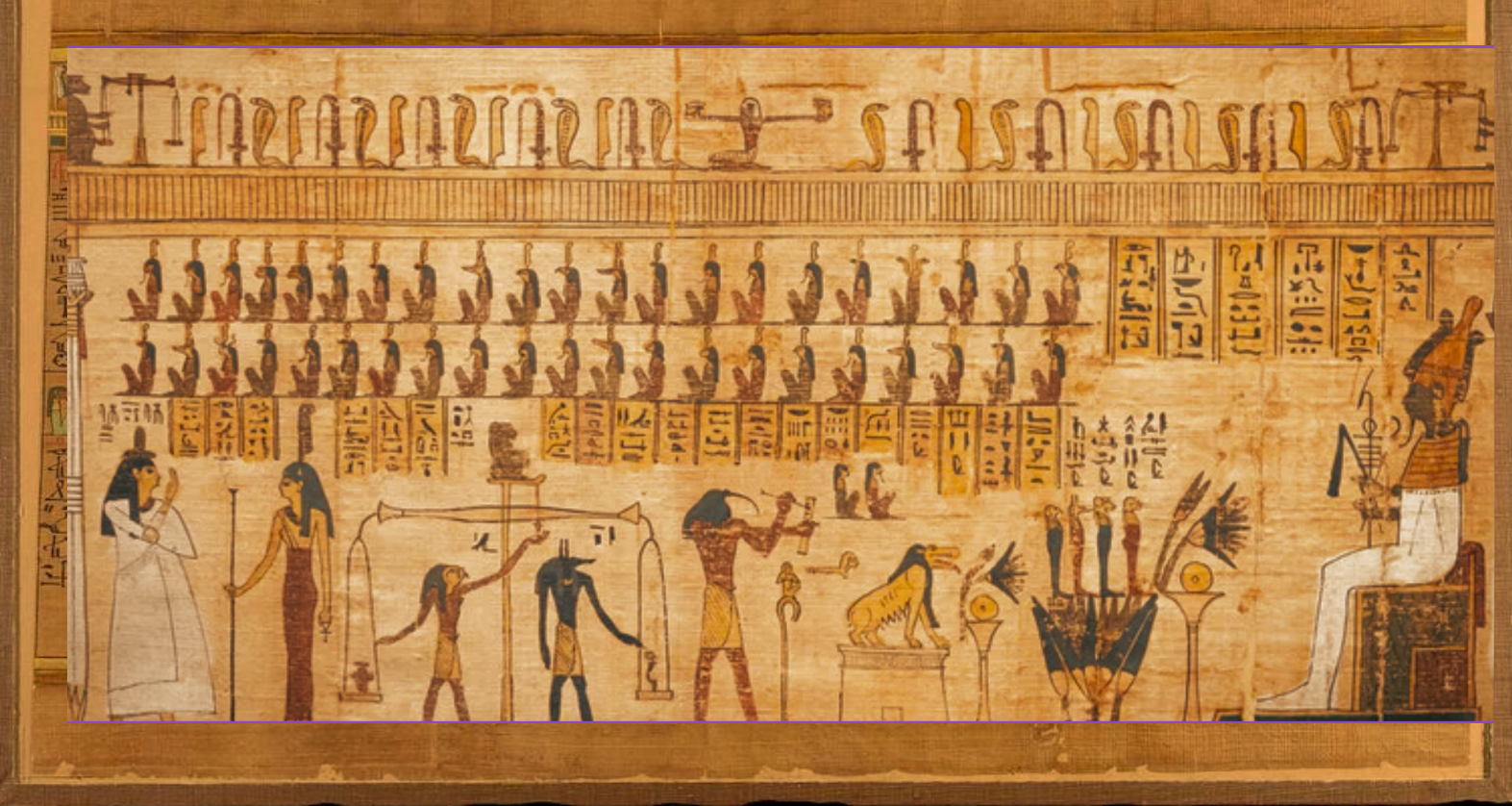
Spell 125 of the Book of the Dead brings the deceased before a divine assembly. Here, in the Hall of Two Truths, they address forty-two assessors and declare their innocence of wrongdoing.
These declarations concern actions such as falsehood, theft, and killing. They give the judgment a distinctly ethical dimension: a person must answer for their conduct.
The familiar weighing scene gives this reckoning visual form.
In the Papyrus of Ani, his heart rests opposite Ma’at’s feather. Anubis attends the balance. Tehuti (Thoth), the divine scribe, stands ready to record the result. Ani’s ba, depicted as a human-headed bird, witnesses the scene.
Why the Heart?
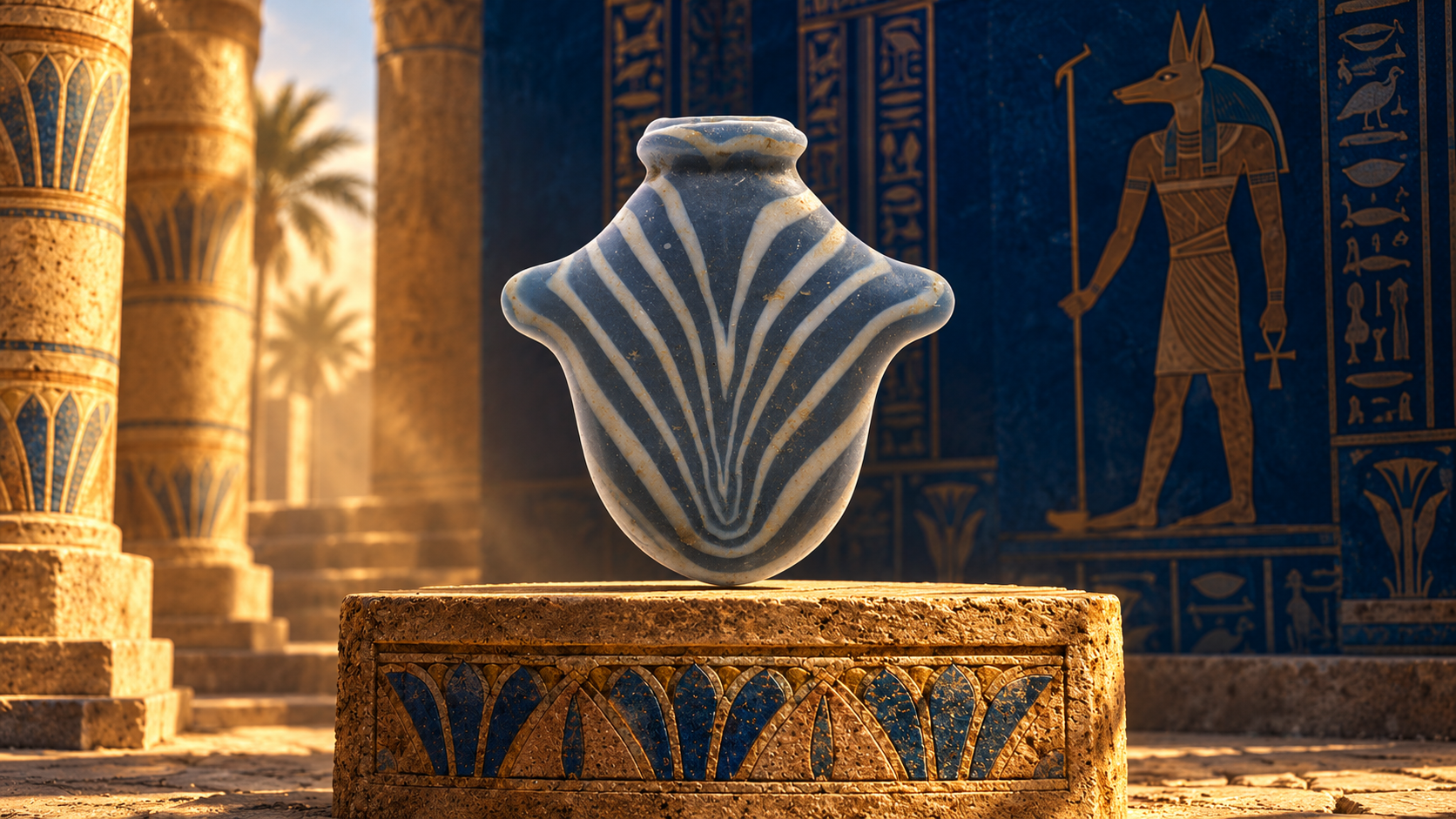
For ancient Egyptians, the heart was a center of thought, memory, feeling, and moral character. It represented the inner life from which a person’s actions arose.
This gives the image its depth. The heart bears witness to the person one has become.
When we bring this symbolism into contemporary reflection, we must do so with compassion. Grief, exhaustion, and emotional pain deserve tenderness. We would never take a sorrowful heart as evidence of spiritual failure.
Our inquiry concerns how we live: how honestly we speak, how responsibly we act, and how we respond when our actions cause harm.
Can we meet ourselves truthfully while remaining willing to grow?
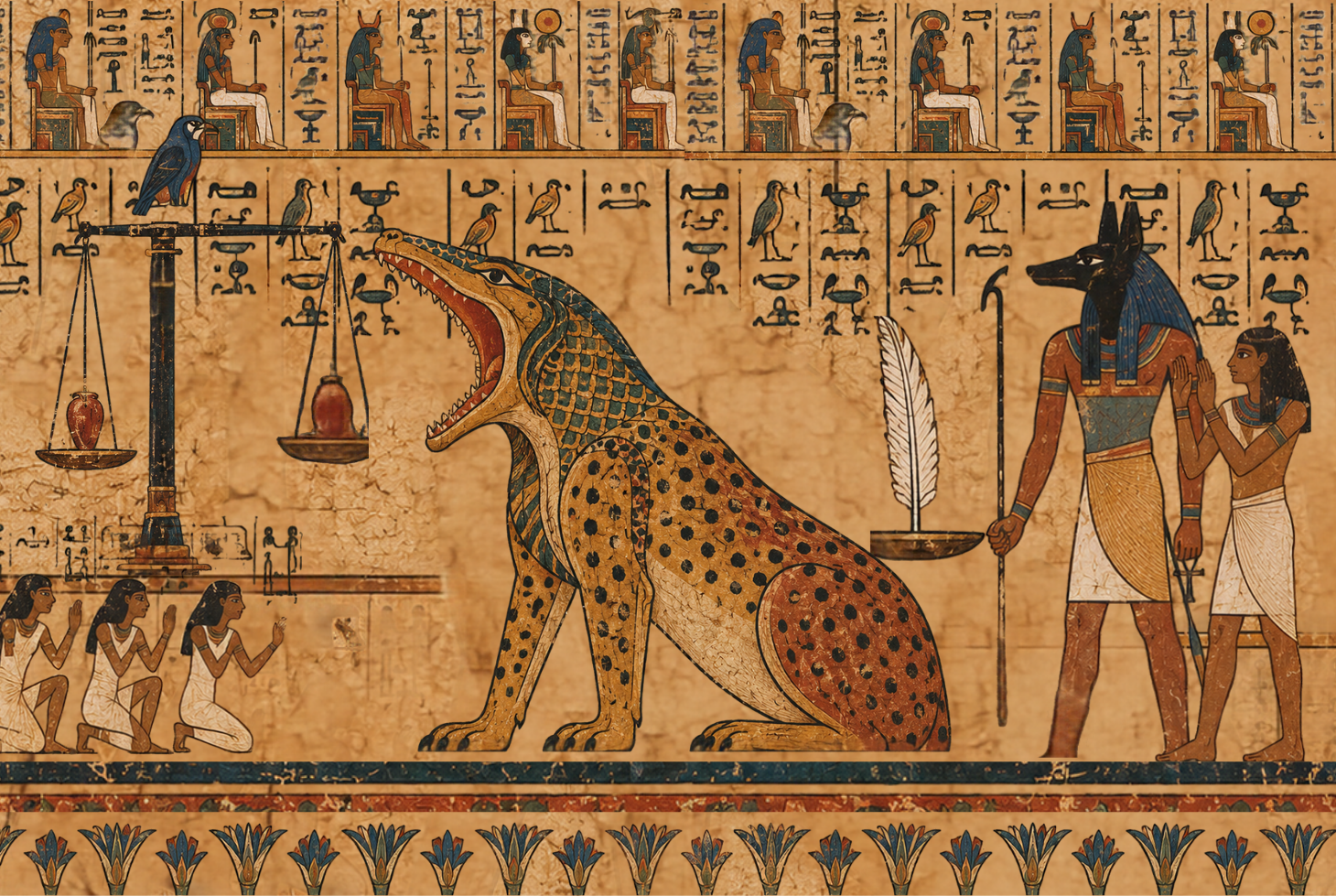
What Lay Beyond the Scales?
Beside the balance waits Ammit, the Devourer: a composite creature with features of a crocodile, lion, and hippopotamus. She represents the devastating consequence of failed judgment—the loss of blessed continued existence.
Those who passed successfully could be recognized as maa-kheru, “true of voice” or “justified.”
Beyond that reckoning lay hope.
One cherished expression of the Egyptian afterlife was the Field of Reeds. Ani’s papyrus depicts waterways and agricultural abundance, with the deceased cultivating and harvesting crops. Continued life included activity, nourishment, and participation in a fertile world.
There is something quietly moving about this vision: eternity imagined through the familiar gifts of land and water, growth and sustenance.
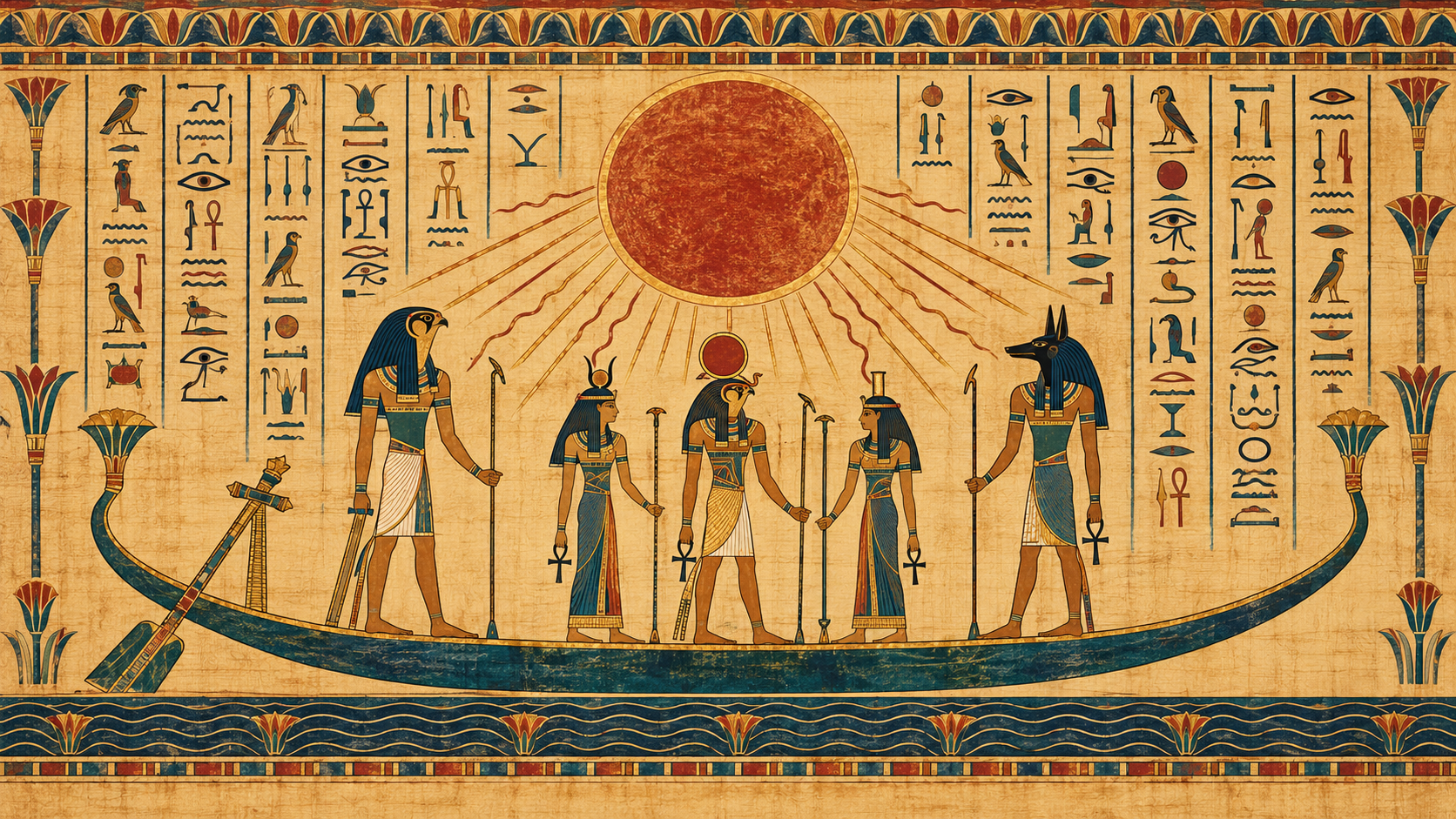
Preparing for Continued Life
Egyptian preparations for death reveal the importance placed upon continued existence.
Care for the body, funerary objects, and sacred texts supported the passage. The Opening of the Mouth ritual sought to restore capacities such as breathing, speaking, and eating.
The collection we call the Book of the Dead is more closely rendered as Spells for Coming Forth by Day. Its texts offered guidance and protection for the deceased.
The title itself invites us to pause.
Coming forth by day.
We hear in those words an orientation toward renewed presence—the possibility of emerging, moving, and participating in existence again.
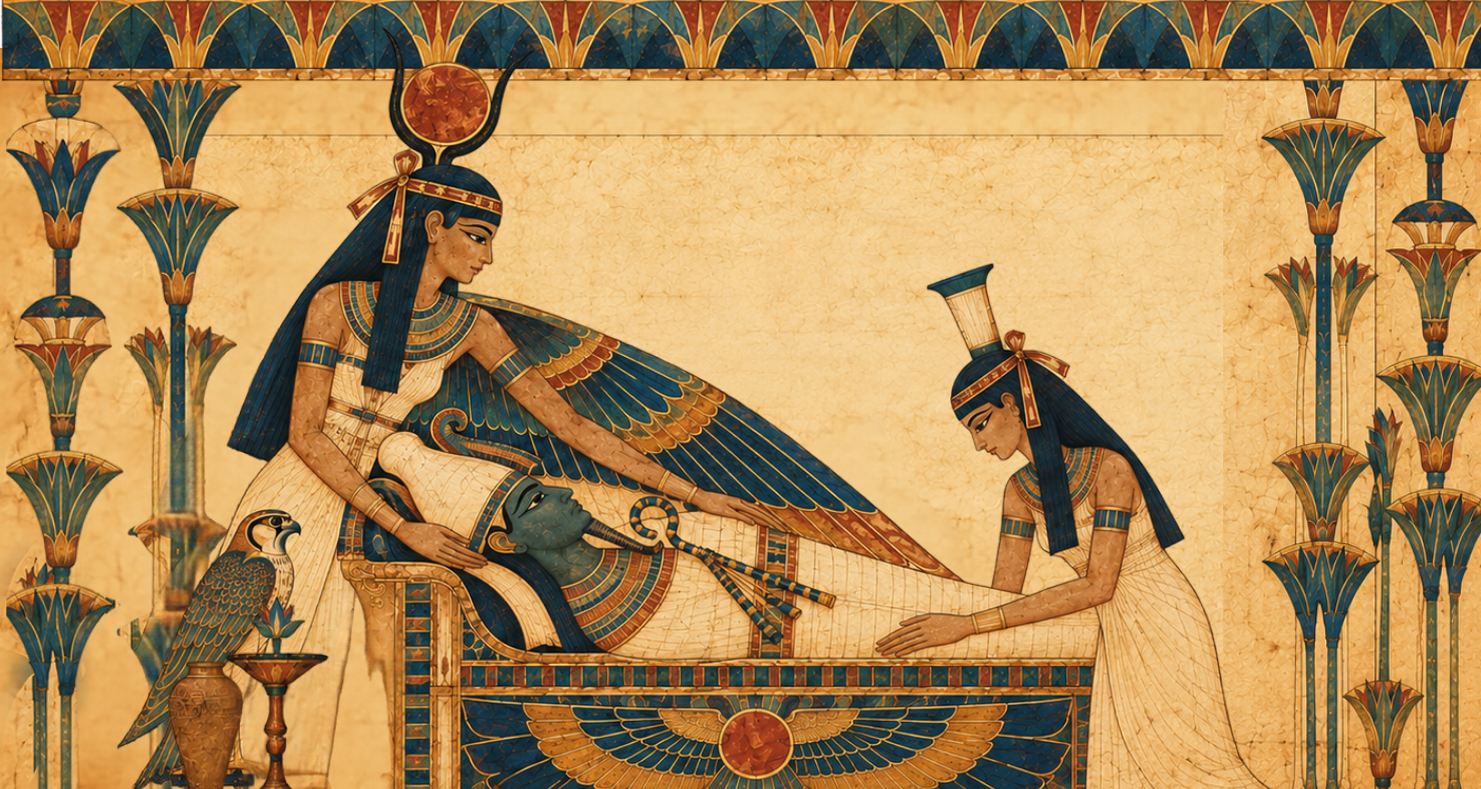
Aset, Asar, and the Work of Restoration
The story of Aset (Isis) and Asar (Osiris) deepens this hope.
Accounts vary, but a central thread tells of Asar’s death and Aset’s devoted work to recover and restore him. With Nebet-Het (Nephthys), she protects his body and helps restore the breath of life.
Asar continues as ruler of the otherworld, while Heru (Horus) succeeds to earthly kingship. His restoration became central to Egyptian understandings of rebirth.
For us, Aset’s devotion opens a contemplation of care expressed through action.
She searches. She tends. She protects.
We may ask where that quality of devotion is needed in our own lives. What relationship needs attention? What meaningful practice have we neglected? What part of our creative or spiritual life is asking to be welcomed back?
These are our contemporary reflections, offered in conversation with the ancient story.
Living in Ma’at, One Choice at a Time
We can carry the heart and feather into daily life as an invitation to greater integrity.
Sometimes that means speaking a truth we have avoided. Sometimes it means listening long enough to understand another person’s experience. Sometimes it means honoring a limit so that our promises become more sustainable.
Repair may be simple and specific: acknowledging a mistake, returning what we borrowed, or following through on an agreement.
Living in Ma’at becomes meaningful through what we practice.

A Quiet Practice for the Heart
Sit comfortably and allow your breathing to settle into its natural rhythm. If it feels welcoming, place a hand over your heart.
Bring one recent interaction to mind. Notice what happened, how you responded, and what remains unfinished.
Then gently ask:
Where did my actions reflect my values?
Where is greater honesty or care needed?
What is one step I can take toward right relationship?
Allow an answer to be ordinary and achievable. Write it down, and choose a time to act upon it.
This is a contemporary contemplative practice inspired by our study of Ma’at.
We offer it as a way of bringing reflection into relationship—where our understanding can become care, courage, and responsibility.
May our words grow truthful.
May our actions become worthy of our intentions.
May we tend what sustains life.
With love and reverence,
Heather & Donny
Black Swan Temple